Nayib Bukele has sent thousands of Salvadoran troops to Haiti in the first overseas operation of its kind. But can the security model that transformed El Salvador work in a country where state institutions have nearly ceased to exist?
November 19, 2026
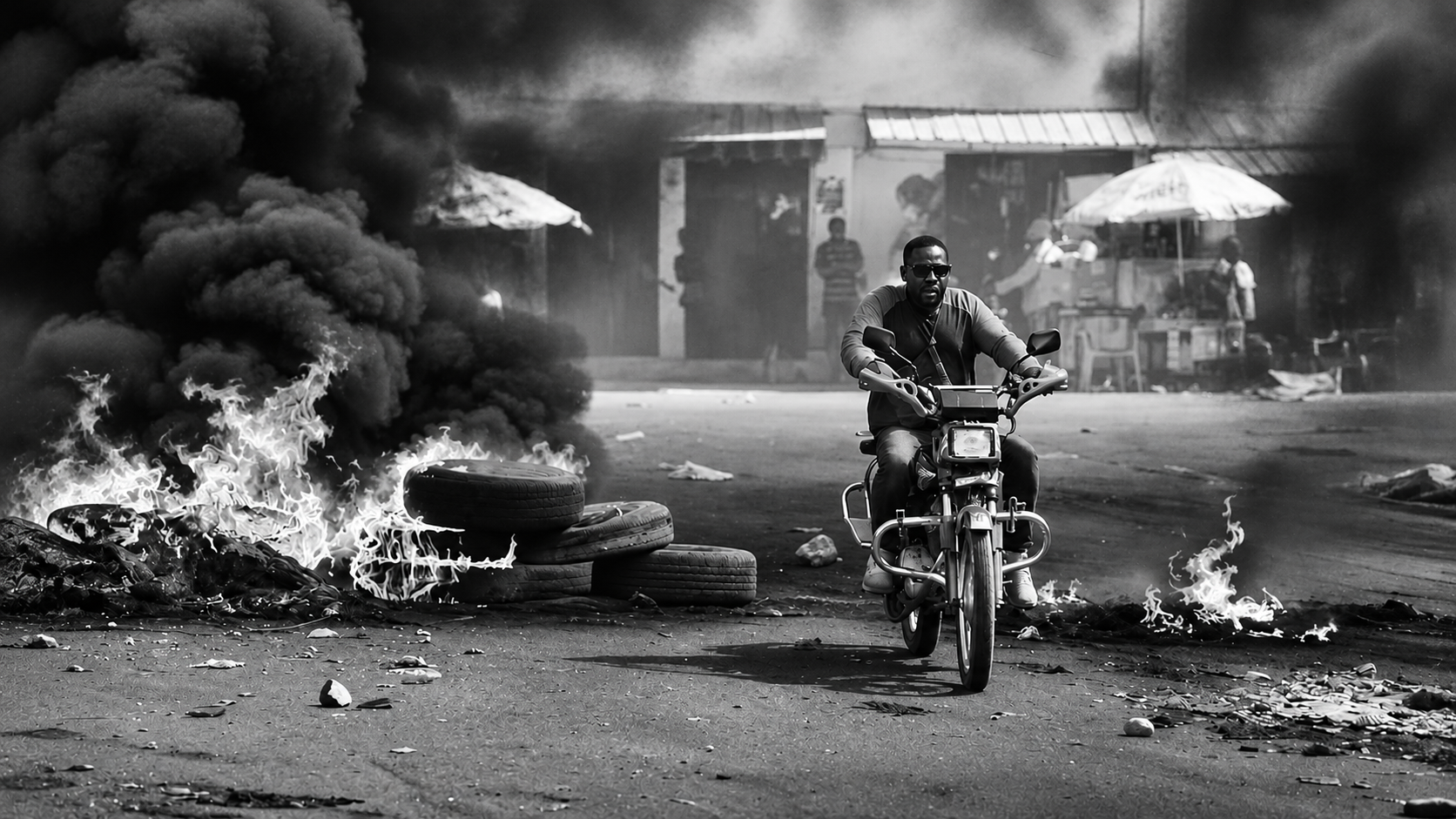
Haiti is living through one of the gravest security crises in the Western Hemisphere. Armed gangs control most of the capital, criminal networks hold the key transport routes, and the government’s authority barely extends beyond a few districts.
Now an unexpected player has entered the conflict: El Salvador.
President Nayib Bukele has deployed more than 2,000 troops to Haiti. It is the first major test of his hard-line, controversial approach to organized crime outside his own borders. The operation has drawn worldwide attention and raised hopes among some Haitians. It has also raised uncomfortable questions about sovereignty, military accountability and the future of foreign security missions.
A country that lost control
Haiti’s crisis did not begin with the arrival of Salvadoran soldiers.
The assassination of President Jovenel Moïse in July 2021 accelerated a political and institutional collapse that was already well underway. The country could not form a stable government, while armed criminal groups kept expanding the territory they held.
In February 2026, the Transitional Presidential Council handed executive power to Prime Minister Alix Didier Fils-Aimé. The transition, however, has not given the state real control over the country.
The security situation remains dire. According to the United Nations, 1,167 people were killed and another 459 injured in Haiti between July and September 2026. Gang violence, kidnappings, sexual violence and territorial wars affect cities and countryside alike. The humanitarian toll is just as severe, with huge numbers of people forced from their homes.
Who runs the streets
One of the strongest criminal coalitions is Viv Ansanm, “Living Together” in Haitian Creole. It united several formerly rival groups, which now coordinate their actions and challenge the state far more effectively.
Among the best-known leaders are:
- Jimmy Chérizier, known as Barbecue, a former police officer who became one of the most notorious armed-group leaders in the country.
- Wilson Joseph, known as Lanmò San Jou, linked to the 400 Mawozo gang.
- Jeff Larose, also known as Jeff Canaan or Taliban, tied to the armed group operating in the Canaan area.
These are not ordinary street gangs. They have weapons, financial networks, territorial structures and connections to political and business circles. That is why conventional policing has become less and less possible.
Why El Salvador stepped in
The immediate trigger was an attack on October 18, 2026. Four Salvadoran aviation technicians serving with the international security effort in Haiti went missing after an ambush near Port-au-Prince.
Bukele responded by sending additional forces. By the end of October, about 2,000 Salvadoran soldiers had arrived, and the contingent is expected to reach roughly 2,500. Officially, Bukele presented the mission as a search-and-rescue effort for the missing men. Very quickly, though, it grew into a much broader military campaign against Haitian armed groups.
The UN has clarified that most Salvadoran troops operate outside the UN-backed Gang Suppression Force. That raises questions about who commands them, how their actions are coordinated and what rules they follow. As of November 16, the four missing Salvadorans had still not been found.
Bukele’s model goes abroad
Bukele built his political career on a ruthless war against organized crime. His government declared a state of emergency, carried out mass arrests and built the enormous CECOT prison. Homicides fell sharply, and he became one of the most popular leaders in Latin America.
His methods also have serious critics. International human rights organizations have documented arbitrary detention, allegations of torture and violations of due process.
Haiti poses a very different problem. When Bukele began his campaign, El Salvador had working state institutions and a centralized security system. Haiti’s institutional collapse runs much deeper. Its gangs are territorial armed organizations with weapons, money and political connections.
The Salvadoran approach may deliver short-term security gains. It cannot, by itself, rebuild a justice system, create a functioning police force or restore public administration.
Military operations and mounting controversy
The Salvadoran contingent has already clashed directly with major gangs. On November 8, its forces attacked a property linked to Wilson Joseph, leader of the 400 Mawozo gang. On November 18, Bukele published footage of helicopters firing on the residence of another gang leader, Jeff Larose, and presented it as a major blow to organized crime.
There is, however, no independent confirmation that Larose was killed, or even that he was at the property. The UN-backed Gang Suppression Force said it had no part in the operation. The distinction matters: military action outside the international force’s chain of command raises questions about responsibility, oversight and the protection of civilians.
UN human rights officials warn that security operations themselves carry grave risks for civilians. By the UN’s count, more than half of those killed or injured in the third quarter of 2026 were victims of security-force operations against armed groups. The fight against the gangs is dangerous for reasons beyond the clash between armed groups and government forces.
Is Haiti welcoming Bukele?
The Haitian government publicly welcomes Salvadoran help. On November 16, Security Minister Patrick Pélissier praised the deployment, saying it had raised public expectations and helped shift momentum against the gangs. Thousands of Haitians have taken to the streets in support of Bukele and the Salvadoran troops. The two governments are discussing closer cooperation, including a possible extension of the mission.
But rallies and official statements should not be mistaken for national consensus. Many Haitians desperately want security. The country’s history with foreign military interventions, though, makes concerns about sovereignty and accountability entirely understandable.
The real question: what comes after the military operation
Haiti’s main challenge is not simply defeating individual gang leaders. Even if the army drives the gangs out of some neighborhoods, someone has to hold those areas afterward. Police stations must work. Courts must sit. Schools and hospitals must reopen. People must be able to travel without paying criminals for passage.
Without these, territory can easily slide back under gang control. There is also the question of how long El Salvador intends to stay. The length of the deployment, the command arrangements and the fate of the four missing technicians all remain unresolved.
For Bukele, the operation is a chance to prove that his security model works beyond El Salvador. For Haiti, it may bring temporary relief after years of violence. But winning on the battlefield and rebuilding a country are two very different achievements.
The question is no longer whether Bukele can defeat Haiti’s gangs. It is whether Haiti can build a state capable of governing itself once the foreign soldiers go home.