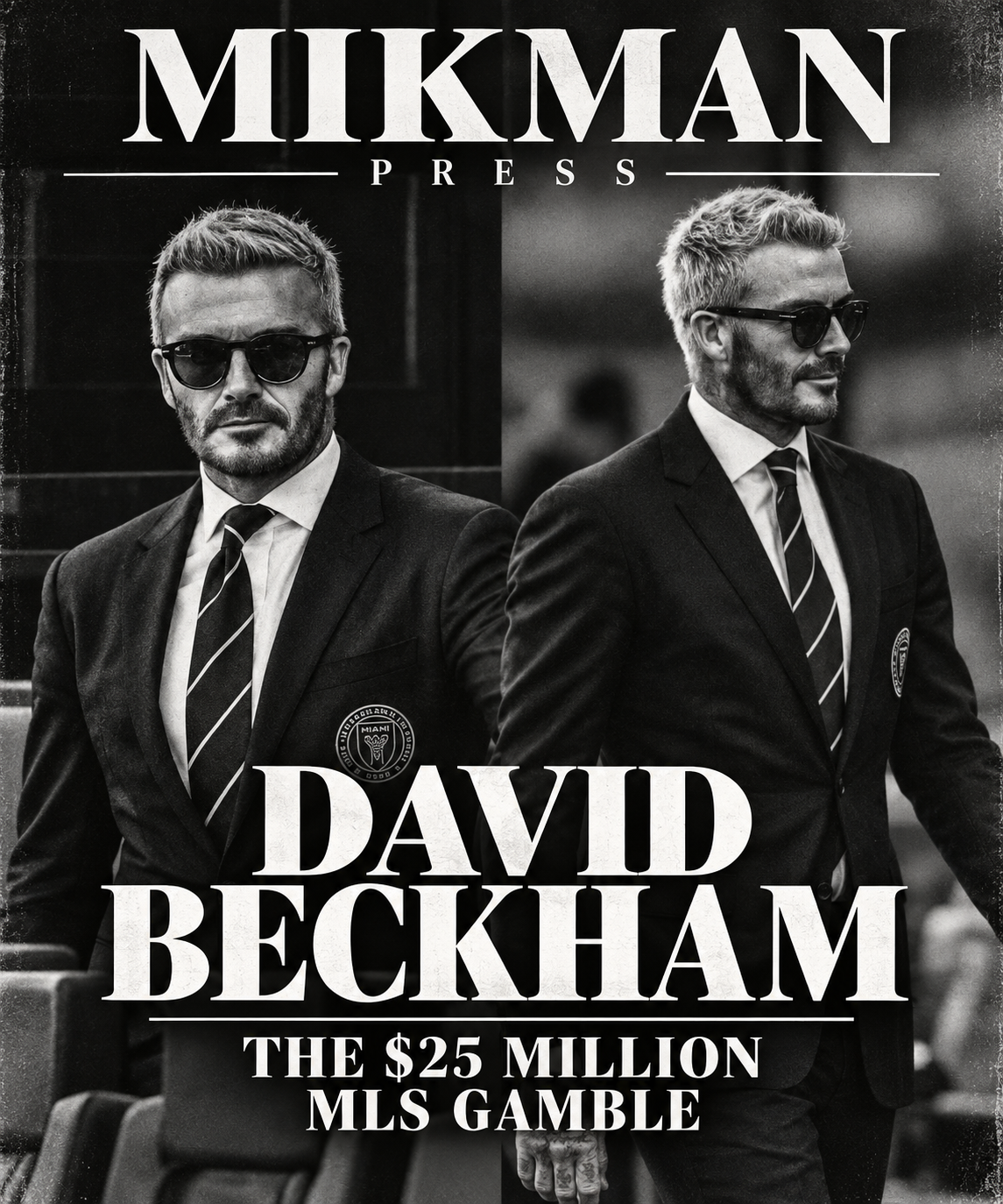
When David Beckham left Real Madrid for Major League Soccer in 2007, the move looked strange to many people.
He was 31 years old, still one of the most recognizable footballers in the world, and was leaving European football for the Los Angeles Galaxy — a club playing in a league that was still trying to establish itself as a major sporting competition in the United States.
But Beckham’s deal with MLS was about much more than football.
It was also a business agreement that would eventually give him a path into club ownership.
The $6.5 million salary was only part of the deal
Beckham signed a five-year agreement with the LA Galaxy in January 2007. His guaranteed compensation was reported at approximately $6.5 million per year, including a $5.5 million base salary. The Washington Post
That figure was enormous by MLS standards, but it was nowhere near the $250 million figure that appeared in headlines at the time.
The important distinction is that the widely reported $250 million was an estimate of Beckham’s potential overall earnings package, including salary, sponsorships, commercial opportunities, merchandise-related income and other revenue-sharing arrangements. It was not a $250 million salary. mlssoccer
Contemporary reports described a complicated arrangement that gave Beckham opportunities to benefit from the commercial growth generated by his presence in MLS.
One 2007 analysis estimated the potential package at roughly $10 million annually from the Galaxy, around $20 million from existing sponsorship arrangements, potentially another $10 million from merchandise and an additional profit-sharing component. These were estimates rather than guaranteed annual payments. Los Angeles Times
And the commercial effect was immediate.
The Galaxy’s ticket revenue rose sharply, sponsorship activity increased and the club reported more than $23 million in revenue during 2007. Sports Business Journal reported that Beckham received his guaranteed $6.5 million plus a percentage of gate, merchandise and sponsorship revenue.
The clause that mattered even more
The most consequential part of Beckham’s MLS contract was not necessarily his salary.
It was the ownership option.
His 2007 agreement gave him an opportunity to acquire an MLS expansion franchise at a heavily discounted expansion fee, subject to conditions. Later reporting put the option at $25 million.
At the time, this was an extraordinary provision.
Beckham was not simply being paid to play football in America. He was being given a potential route to become an MLS owner.
The league was also betting that his global profile could help transform the commercial landscape of American soccer.
And the numbers around MLS expansion changed dramatically over the following years.
When New York City FC was awarded an expansion franchise, Manchester City and the New York Yankees ownership group paid a reported $100 million expansion fee. By 2017, MLS was announcing expansion fees of $150 million for teams 25 and 26.
That made Beckham’s $25 million ownership option particularly significant.
From player to owner
Beckham eventually exercised the option in 2014 and chose Miami as the location for his MLS project. fantasy.mlssoccer.com
The process was far from simple.
There were stadium negotiations, financing questions, land issues and the need to assemble an ownership group.
Eventually, Beckham was joined by partners including Jorge and José Mas, Marcelo Claure, Masayoshi Son and Simon Fuller. MLS officially awarded Miami an expansion franchise in 2018. fantasy.mlssoccer.com
Inter Miami CF began MLS competition in 2020.
Beckham had therefore completed a remarkable transition: from one of the world’s most famous players to one of the owners of a new MLS club.
The real business lesson
The most interesting part of the Beckham story is not the exaggerated claim that he earned $50 million every year from selling tickets, shirts, hot dogs and beer.
The documented story is more interesting.
Beckham entered MLS with a compensation package that combined a substantial guaranteed salary with commercial opportunities. More importantly, his contract gave him an ownership pathway at a time when MLS expansion fees were far lower than they would become later. Los Angeles Times
He then actually used that option.
And Inter Miami became a major global football brand, particularly after Lionel Messi joined the club in 2023. Forbes described Beckham as part of the ownership group that led the club, alongside Jorge and José Mas.
The financial story therefore should not be reduced to a simple formula of “$6.5 million salary became $500 million.”
It was a much more complicated combination of football, celebrity, commercial rights, investment, ownership and the long-term growth of MLS.
That is what makes Beckham’s American move genuinely remarkable.
In 2007, he was selling the idea of David Beckham in America.
Years later, he was no longer simply selling the player.
He was helping build the club.
That may have been the most important clause in the entire contract.
Fact-check note
The often-repeated $500+ million figure should not be presented as Beckham’s verified personal profit from the MLS deal. Likewise, the $250 million figure attached to the 2007 contract represented an estimated total earning potential, not a $250 million playing salary. The documented figures support a much more nuanced — and arguably more interesting — story.