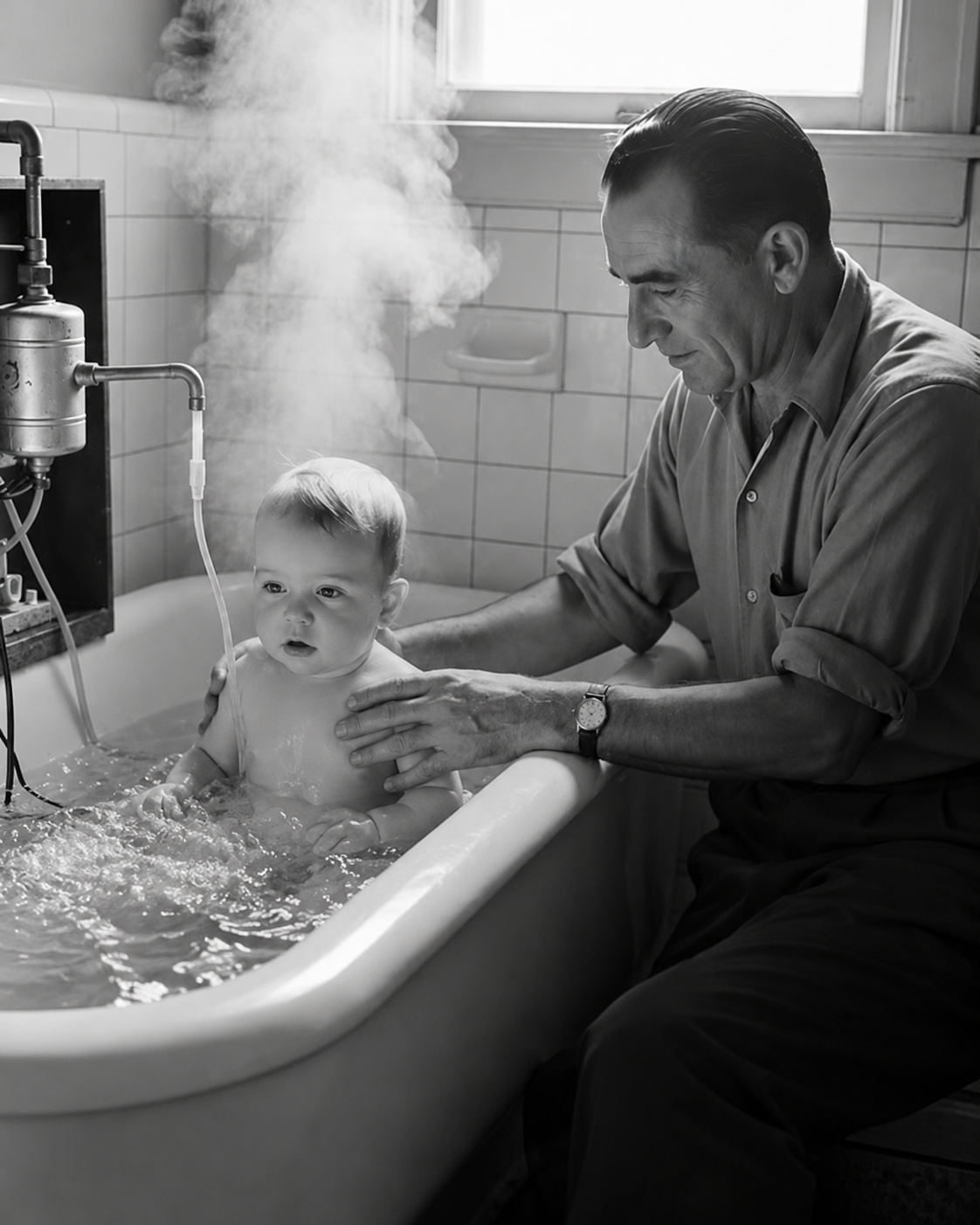
A father looked for a way to ease his son’s pain. What he built grew into one of the best-known wellness brands in the world.
Say “Jacuzzi” and most people picture bubbling water, fancy hotels and a glass of something cold. But the story didn’t start with luxury. It started with a family trying to help a sick child.
From Italy to California
The Jacuzzi family left Italy for California in the early 1900s. The brothers were inventors and businessmen who worked in aviation and farm machinery. Years of building pumps and moving water gave them exactly the skills they’d later need.
The turning point came when Candido Jacuzzi’s young son, Kenneth, developed rheumatoid arthritis. It hurt, and it made it hard for him to move. According to the company’s own account, the family noticed that treatment in warm water eased the pain and helped the boy get around.
The problem was that every session meant a trip to a medical facility. Candido wanted that relief at home.
A pump for one boy
In the 1940s, Candido started building a portable pump that could be dropped into an ordinary bathtub. It pushed water around and created a massaging current, so the family could recreate part of the treatment at home.
The device became known as the J-300. No special therapy bath needed: the pump turned a regular tub into a small home hydrotherapy setup.
Eventually the family realised other people could use it too. In 1956 the Jacuzzi company was officially founded, with the J-300 as its first product.
The goal was medical, not glamorous. They wanted to make hydrotherapy easier to get for people who needed it.
From treatment to treat
The next big step came in 1968, when Roy Jacuzzi developed a bathtub with the jets built right in. It was called the Roman. No more separate pump to lug around.
That was a key move toward the whirlpool bath as we know it. The technology left the medical world behind and went mainstream.
As interest in wellness at home grew, the product grew with it. Bigger tubs, heating and water filtration meant people could stay in longer, and eventually soak together.
Over the following decades, whirlpool baths and outdoor hot tubs became shorthand for comfort and indulgence. A fix for one family’s problem turned into a whole product category.
When a surname becomes a common word
Jacuzzi is now one of the most recognisable names in hydromassage, and its story shows how a technical invention can take on a much bigger cultural meaning.
For many people, a jacuzzi no longer means a particular pump or manufacturer. It means an experience: hot water, strong jets and a private place to switch off.
People also use the name casually for any whirlpool bath or hot tub, even though Jacuzzi is a registered brand.
Invented out of need
The Jacuzzi story is often told as a classic tale of innovation, but it’s more personal than that. Candido Jacuzzi wanted to make his son’s life easier. He used what the family already knew about engineering and turned a medical need into a practical household product.
Roy Jacuzzi later pushed the idea further, with the built-in whirlpool bath that brought hydromassage to a far bigger audience.
The dates worth remembering: the portable J-300 pump came out of work in the 1940s, the company was founded in 1956, and the built-in whirlpool bath arrived in 1968.
It’s a reminder that plenty of everyday products begin with problems that have nothing to do with luxury. Sometimes a whole industry starts with a simple question: how do I make life a bit easier for someone I love?
Sources: