In 2026, mandatory hydration breaks were introduced for the first time at the FIFA World Cup, allowing players to rehydrate and recover in the heat. In modern football, this is known as a hydration break — a pause intended to protect the players’ health.
But many years before that, in the Turkish city of Izmir, there was a very different kind of break during a football match.
Not with water.
But with rakı and wine.
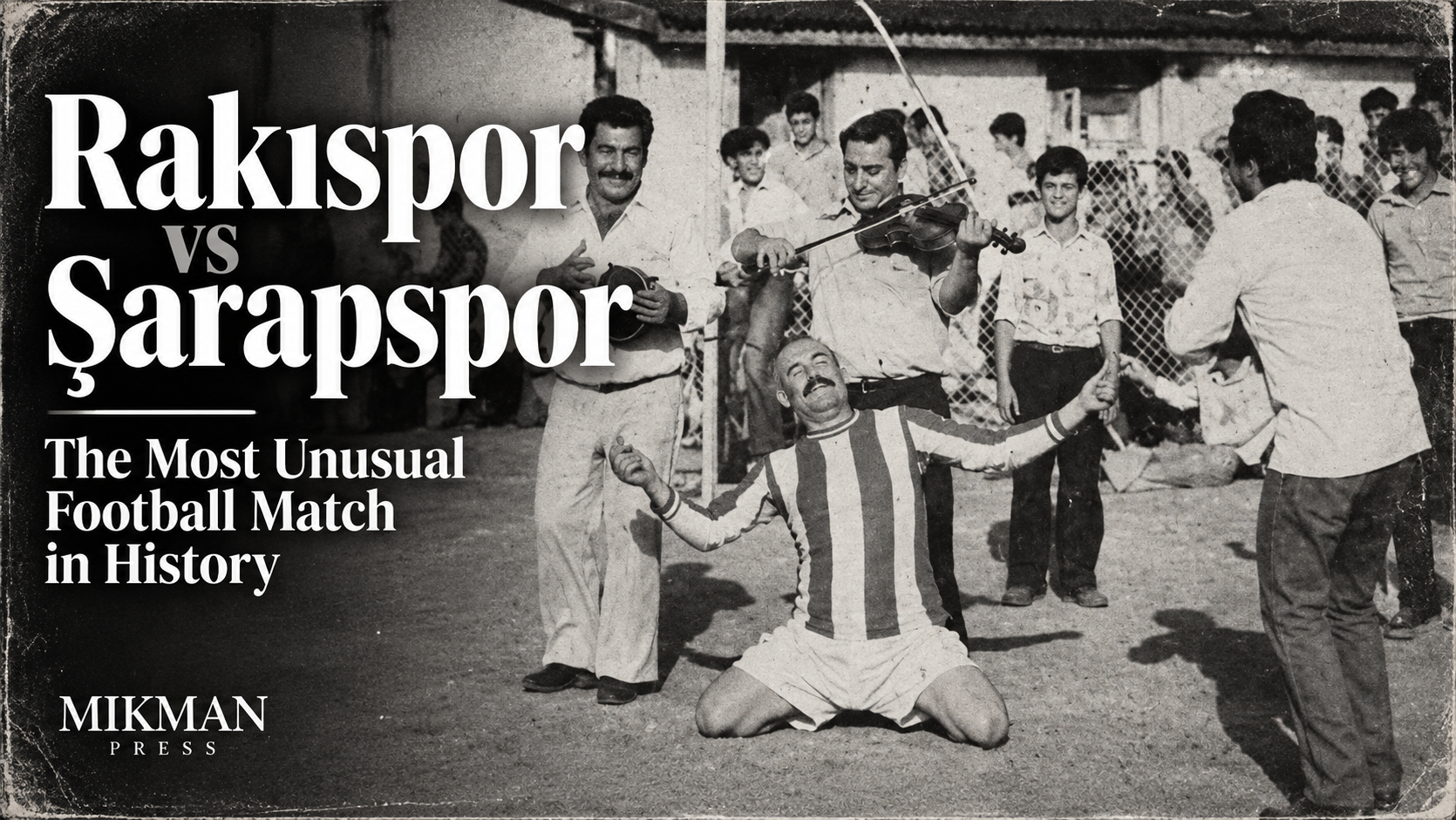
The story began in 1964 in the Bayraklı district of Izmir. Employees from two factories belonging to the Turkish company Tekel — one producing rakı and the other producing wine — decided to organize a football match against each other. What began as a fun workplace tradition quickly developed into an annual local phenomenon known as Rakıspor – Şarapspor.
On one side were the employees from the rakı production facility; on the other were the wine workers. This was not professional football. There was no league, no contracts and no big prize money. It was a local celebration where football, humor and socializing came together.
The most unusual aspect of the matches was that both players and spectators drank alcohol during the event. The games were not only about the result, but also about togetherness, fun and the unique atmosphere surrounding the occasion.
Despite the very unusual circumstances, the matches were not known for conflicts or fights. On the contrary, they are remembered as peaceful and cheerful events that brought people from the surrounding area together.
At a time when football was gradually becoming more professional and commercial, Rakıspor and Şarapspor were a reminder of another era — a time when football was first and foremost part of community life.
The tradition continued until 1980, when it came to an end following the military coup in Turkey. In 2000, there was an attempt to revive the legendary rivalry, and another match was played in front of a large crowd.
Today, Rakıspor and Şarapspor exist only as a memory.
But the story tells us something important about the many faces of football.
For some, football means the World Cup, millions of spectators and strict regulations.
For others, it was a pitch beside a factory, friends, laughter and a match nobody would ever forget.
Perhaps it was the most unusual “break” in football history.
Because back then, the players were not coming for water.
They were coming for something completely different.