He played alongside Johan Cruyff, worked under Rinus Michels and was called up by Ladislao Kubala to the Spanish national team. Then, almost at the last moment, he discovered that his past with Uruguay had closed that door.
Football history is full of players whose names disappeared from the headlines long before their stories became truly interesting. Alfredo Amarillo Kechichian is one of them.
Born in Montevideo on 2 January 1953, Amarillo was a Uruguayan footballer of Armenian descent who built his career far from his family’s ancestral homeland. His journey eventually took him from Nacional in Uruguay to Spain and, in 1976, to FC Barcelona.
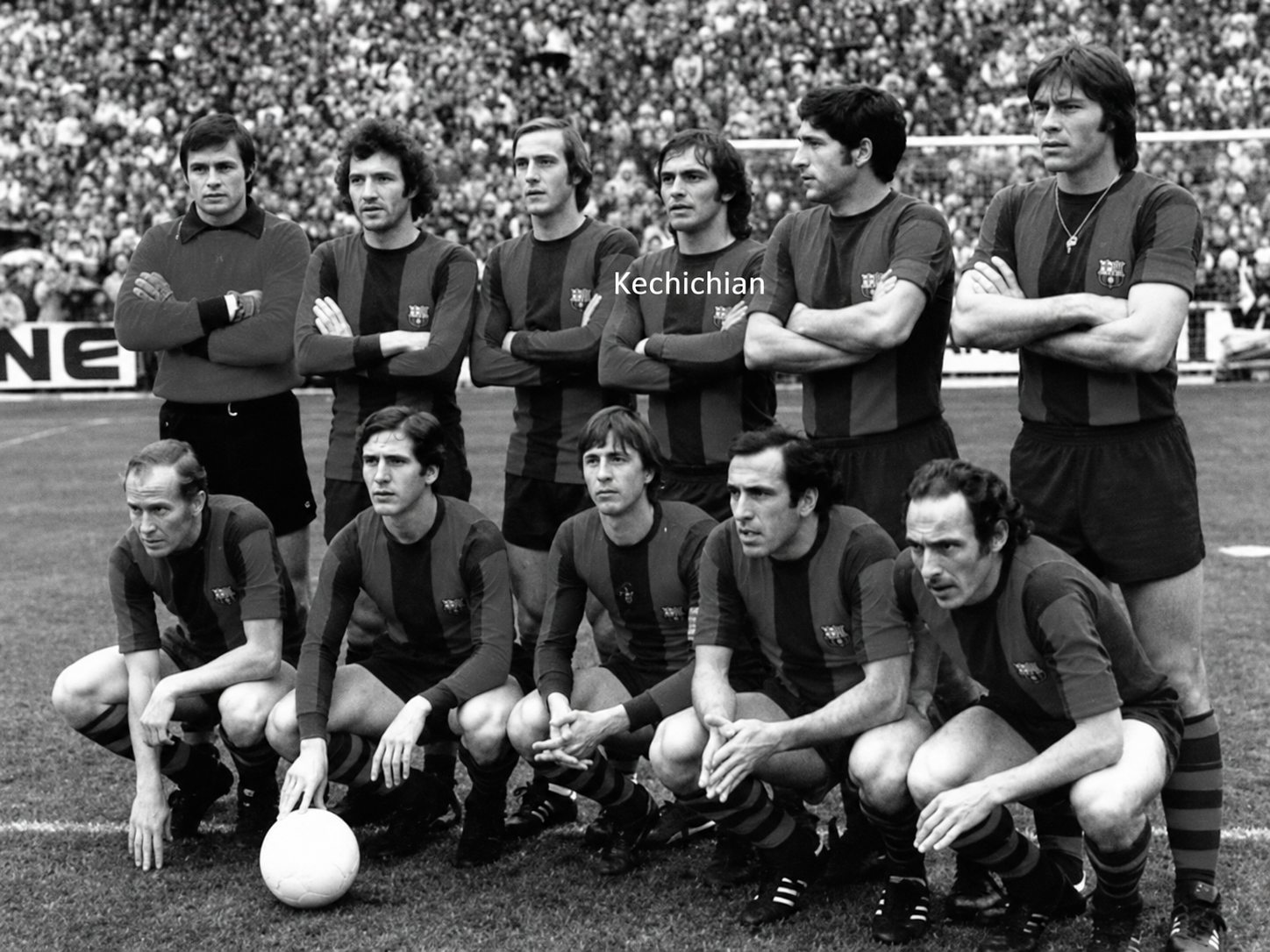
Today, his name is rarely mentioned when the great Barça teams of the 1970s are discussed. Yet Amarillo shared a dressing room with Johan Cruyff and Johan Neeskens, won the Copa del Rey and left behind one spectacular moment that became one of the most memorable goals of his career.
From Montevideo to Spain
Amarillo began his professional career at Nacional, where he played from 1969 to 1973. He then moved to Spain and joined Real Valladolid, spending three seasons there before Barcelona came calling.
The move to Camp Nou changed the scale of his career.
Amarillo joined Barcelona in 1976, during the era of Dutch influence at the club. Rinus Michels was the coach, while Cruyff and Neeskens were among the biggest names in the squad.
According to Barcelona’s official records, Amarillo played 59 matches for the first team, including 42 official games, and scored three goals. He also won the 1978 Copa del Rey with the club.
His position is recorded by Barça as defender, although historical sources have also described him as a midfielder.
The night he destroyed Valencia
The defining moment of Amarillo’s Barcelona career came on 28 November 1976.
Barcelona hosted Valencia at Camp Nou in the 12th round of La Liga. Valencia arrived as one of the strongest sides in the competition, but the match turned into a spectacular Barça victory.
The final score was 6–1.
Manolo Clares scored five times. The other goal belonged to Alfredo Amarillo.
It came in the 58th minute.
Charly Rexach delivered the ball towards the edge of the penalty area. Amarillo met it with his left foot, striking a spectacular volley that flew into the top corner.
Barcelona’s official match archive records the goal.
The goal became famous beyond Spain. Mundo Deportivo later recalled that it was selected by Eurovision as the best goal of the month in Europe.
For a player who scored only three official goals for Barcelona, that one was enough to give his name a permanent place in the club’s football history.
Cruyff, Neeskens — and a missed World Cup
There was another remarkable chapter in Amarillo’s Barcelona story.
During his years in Spain, he obtained Spanish citizenship and came into the plans of Ladislao Kubala, then coach of the Spanish national team.
Amarillo himself later recalled that Kubala intended to call him up and even envisaged him playing on the left side of midfield.
But the opportunity disappeared almost as quickly as it had appeared.
Before Amarillo could join the Spanish squad, Barcelona officials informed him that he had previously represented Uruguay as an amateur in an Olympic qualifying tournament in Colombia. The appearance was registered with FIFA and prevented him from representing Spain.
It was an extraordinary case of football bureaucracy changing a player’s international career.
Amarillo had become eligible for Spain through citizenship, but his previous international involvement with Uruguay meant that the 1978 World Cup in Argentina would remain out of reach.
He never played for Spain.
Life after Barcelona
After Barcelona, Amarillo spent the 1978–79 season on loan at Salamanca. He later played for Espanyol, had a spell in Mexico with Neza, returned to Espanyol and eventually went back to Uruguay.
His final professional club was Danubio, where he played from 1982 to 1985.
By then, the footballer who had once shared a dressing room with Cruyff was entering a very different chapter of his life.
In a later interview with El Observador, Amarillo spoke openly about his years in football, his memories of Barcelona and the Spanish national-team episode. The same report described his life in San Luis, Uruguay, far removed from the glamour of Camp Nou.
A small Armenian thread in Barcelona’s history
Amarillo’s Armenian heritage adds another dimension to an already unusual football story.
He was not an Armenian international, nor did he play professional football in Armenia. His career belonged to Uruguay and Spain. Yet his surname and family background connect him to the wider Armenian diaspora — a community that produced athletes, artists and professionals across the world.
Decades later, another player with Armenian family roots would arrive at Barcelona.
Roony Bardghji, born in Kuwait and raised in Sweden, joined Barça from FC Copenhagen in 2025. The Swedish winger became part of the first-team setup and made his competitive debut against Valencia. Barcelona’s official records list him as a Swedish international and a Barça first-team player.
The two players belong to completely different generations and football eras.
But their stories illustrate something bigger: football’s history is rarely contained within national borders.
For Alfredo Amarillo Kechichian, the road began in Montevideo, passed through Valladolid and Camp Nou, and ended far from the spotlight. He played with Cruyff, won a major trophy with Barcelona, scored a goal that Europe remembered — and came within a step of playing at a World Cup for Spain.
He never became a superstar.
But perhaps that is precisely why his story is worth remembering.